

PROJECT
OVERVIEW
Improving Scheduled Caste Livelihoods,
Education & Sustainability
SUMMARY OF THE PROJECT
Science Technology & Innovation Hub for Development of Schedule Caste Communities (STI Hub)
Aditya University, Surampalem, Andhra Pradesh
Department of Science & Technology
DST/SEED/SCSP/STI/2022/970
Dr. K V S Ramachandra Murthy, Professor
Department of Electrical & Electronics Engineering
Aditya Engineering College, Surampalem
Samanasa, Bhatnavilli Villages, Amalapuram Mandal, Dr. B R Ambedkar Konaseema District, Andhra Pradesh



PROJECT
INTERVENTIONS
Technology-Based Interventions for
Sustainable Livelihood Development
A Science Technology and Innovation Hub is proposed to be established for addressing the above-mentioned issues for strengthening the existing livelihoods and well as creating new livelihood option through simple solutions, either by adapting existing technologies or modulating the existing solutions by downscaling the existing equipment. These interventions will improve the livelihood of small and marginalized communities in the selected villages. The details of proposed interventions along with justification is given below.
Details of Technologies Proposed / To be Proposed
-
a
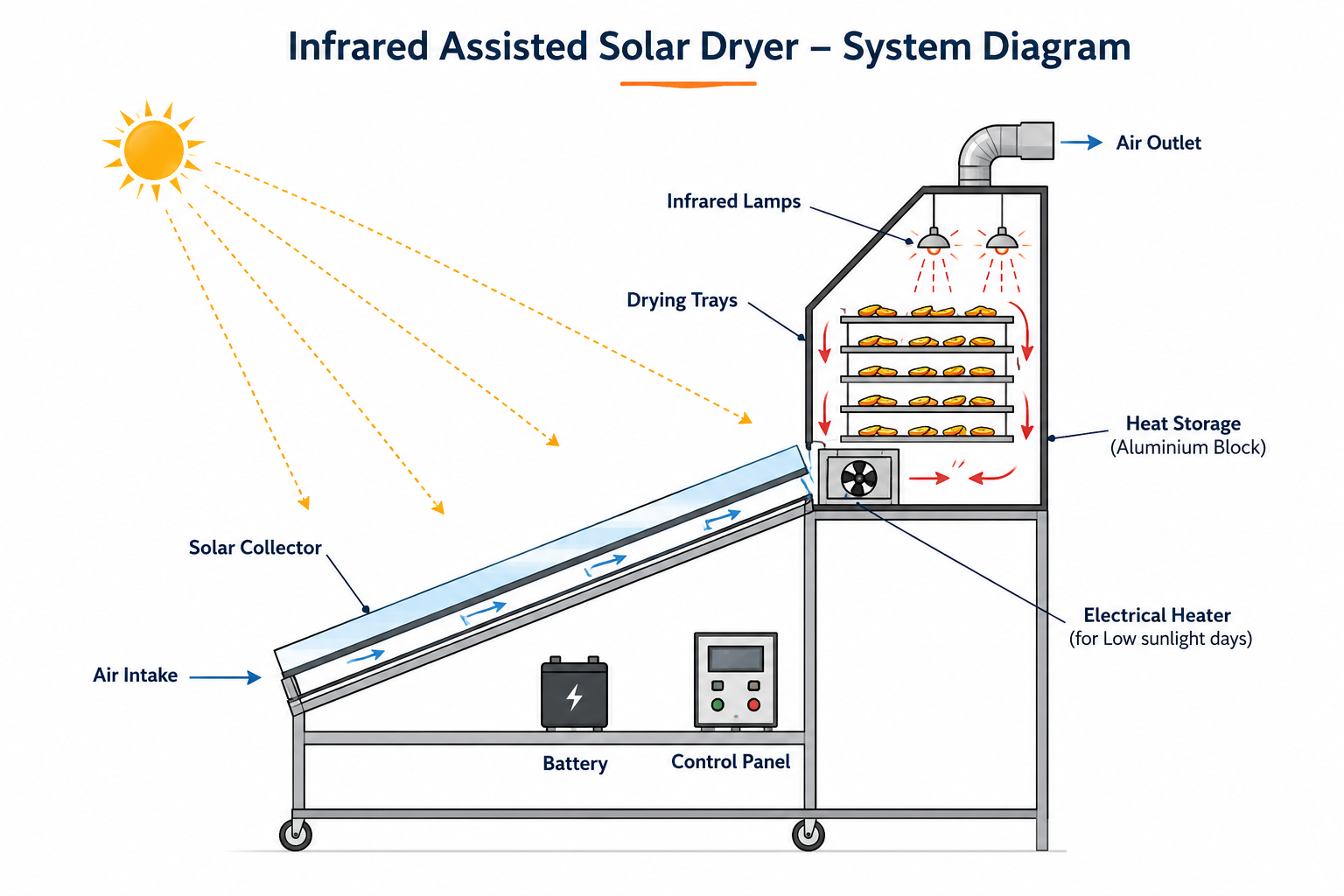
Community Level Mango Pulp Extractor: A low-cost infrared assisted solar dryer will be designed and developed to use at community level. The proposed intervention will help in maintain the quality of the product. The proposed machine will help in controlling the pathogen load thereby improving the shelf life of the product.
-
b
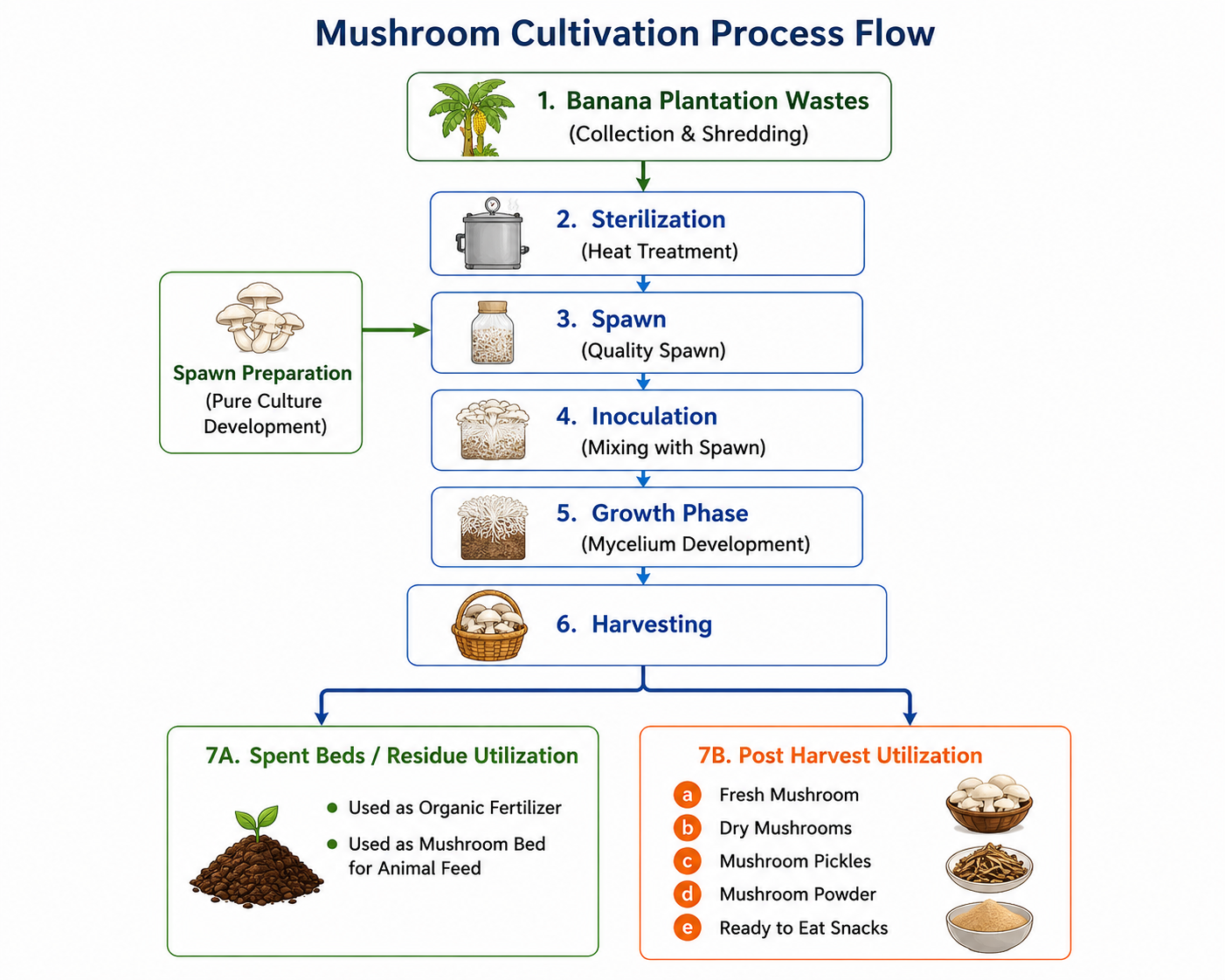
Mushroom Cultivation with Banana Pseudo stems and Coir Waste: The pseudo stem, petiole and midrib of banana, which are usually abandoned to rot will be used as substrate. The method is less expensive owing to the easy availability of residue and offers double the yield compared to the use of straw for mushroom production. Additionally, coir pith will also be used as substrate to grow mushrooms.
-
c
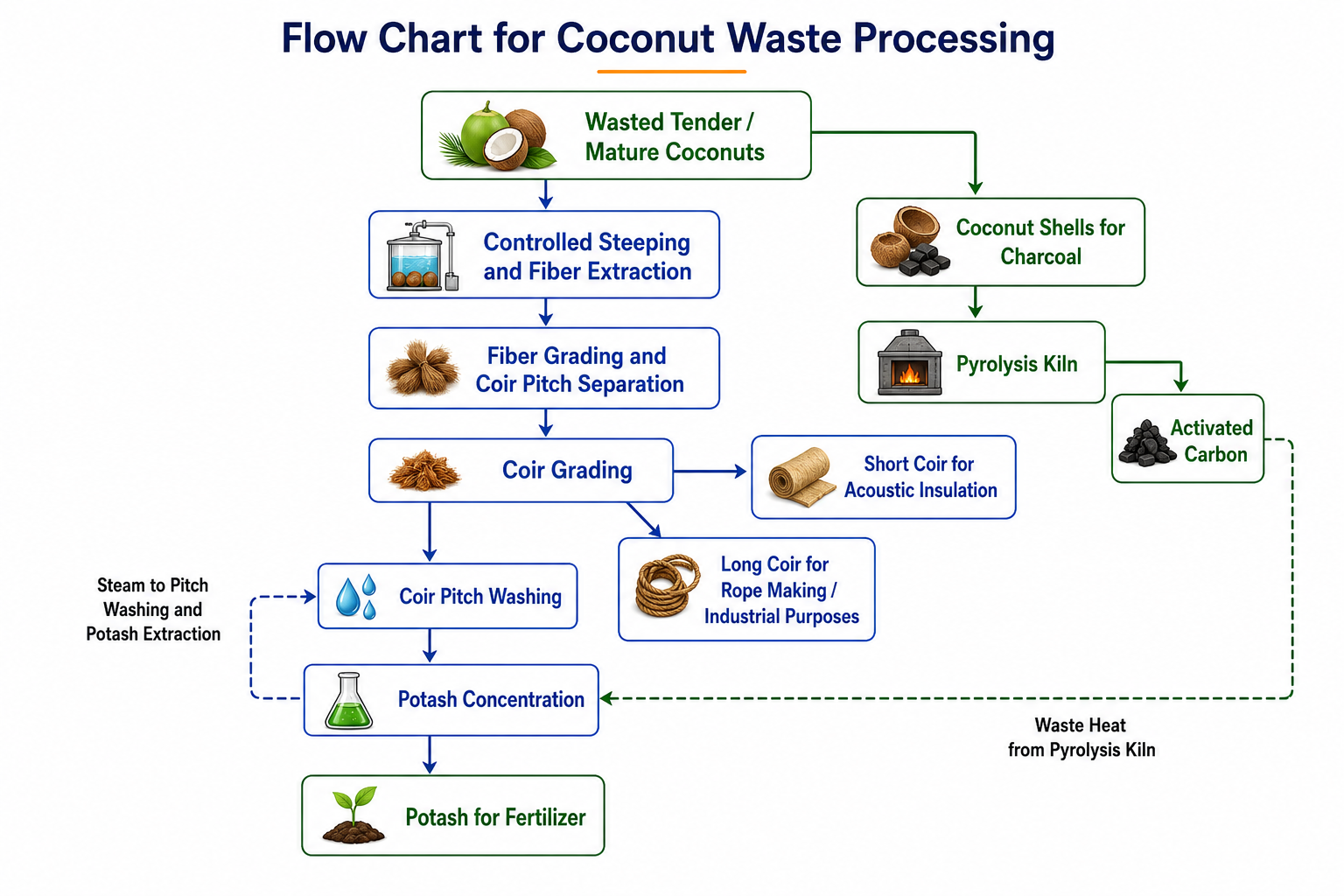
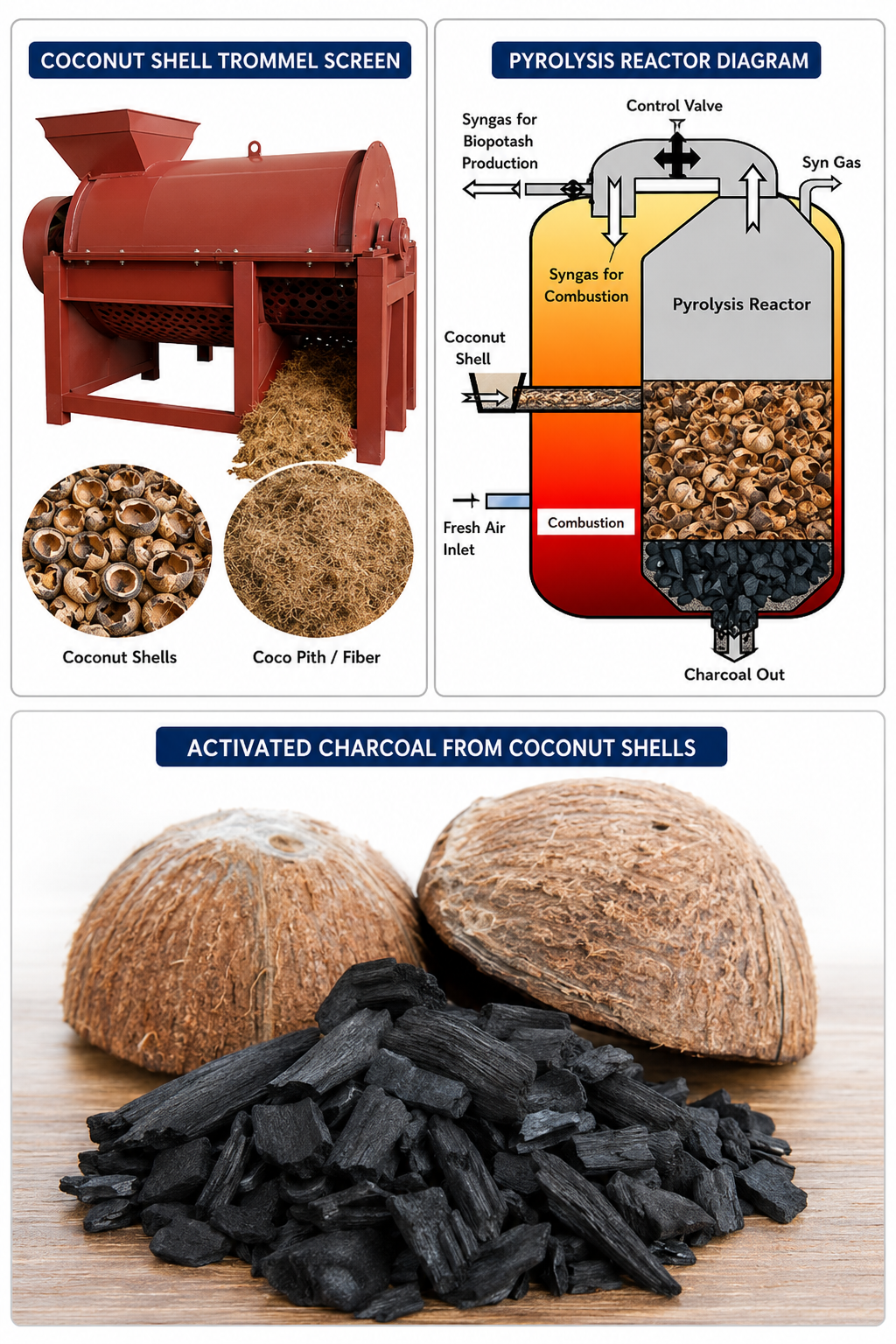
Design and Development of low-cost pyrolysis kiln for production of activated charcoal
-
d
Development of mini semi-automatic fiber extractor and grader
-
e
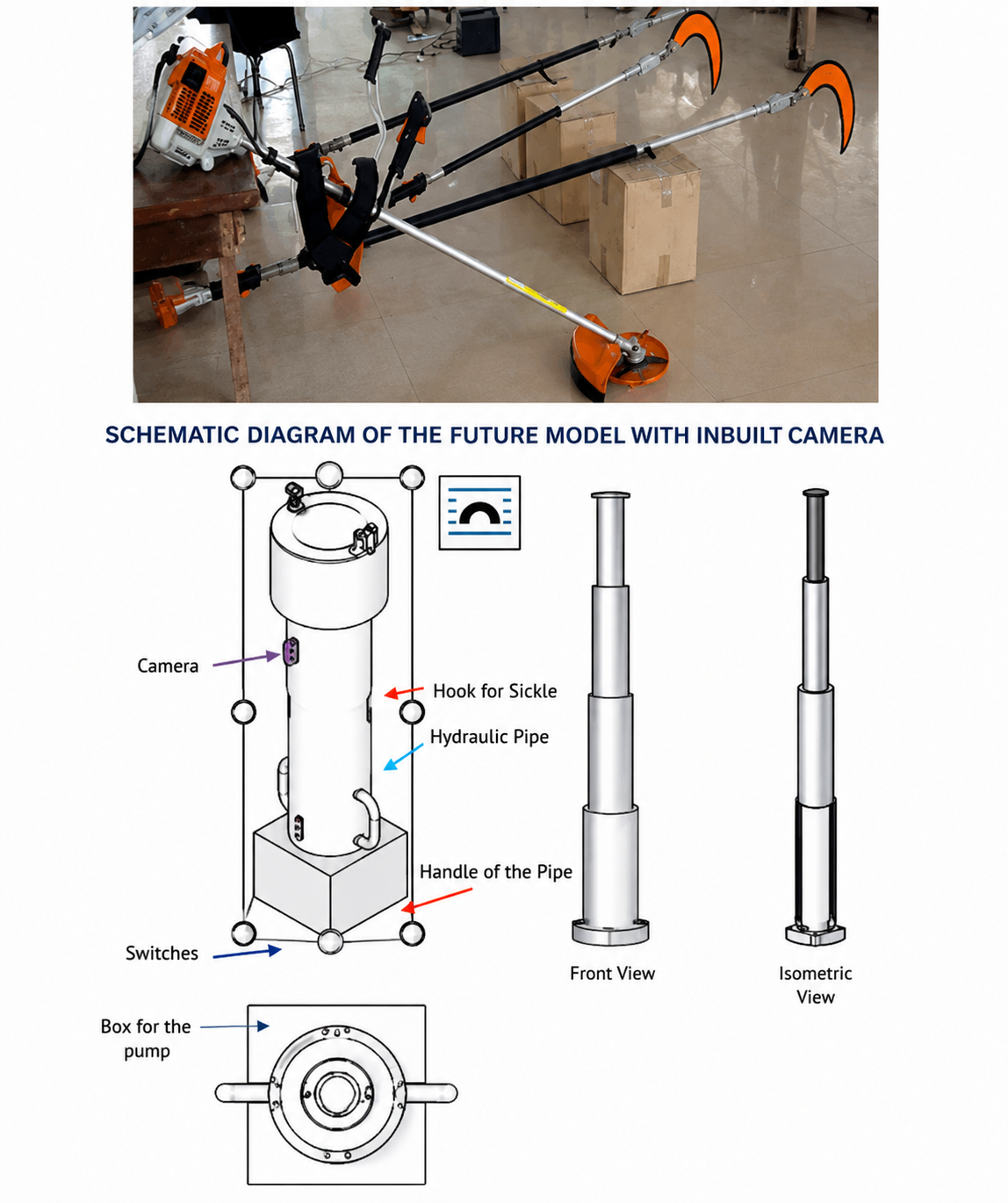
Design and Development of Adjustable Hydraulic Harvester for Oil Palm: A light weight adjustable hydraulic harvester with camera and pulley – will help prevent falling of unnecessary bunches and harvesting of ripened bunches.
Expected Benefits to the Target Groups/Population (5-6 Clear Cut Deliverables)
- Improvement in socioeconomic condition of SC population of target area
- New and Alternative technologies
- Alternate Livelihood options
- Greater access to resources, education, health, infrastructure and other minimum requirements
- Increase in knowledge of people, improvement in skill and capacity building
- Increase household income levels
- Improved habitat and environment conditions
- Greater access to markets.
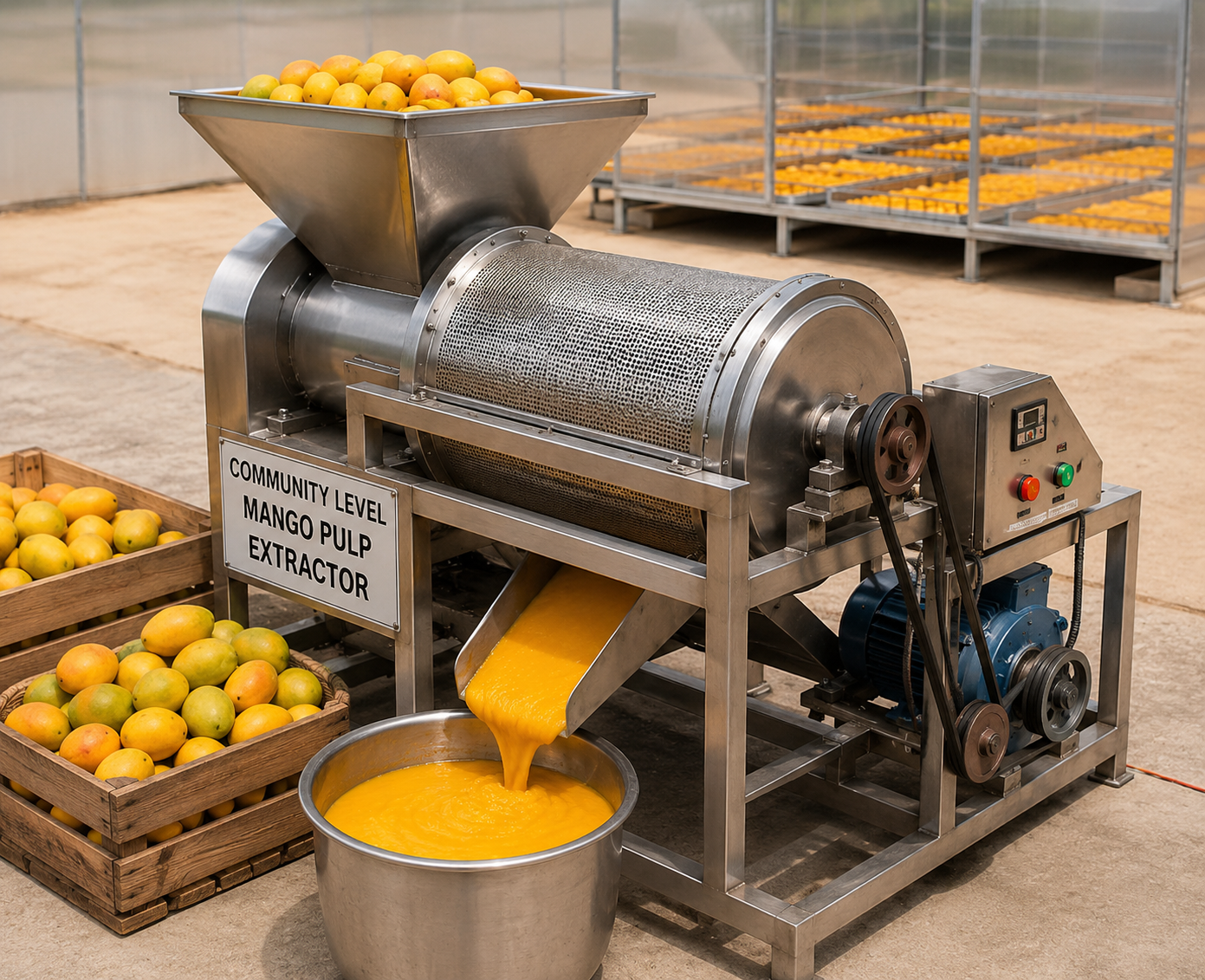
Design and Development of Community Level Mango Pulp Extractor
Low-cost community-level mango pulp extractor with integrated solar drying technology for better quality and extended shelf life.
View Details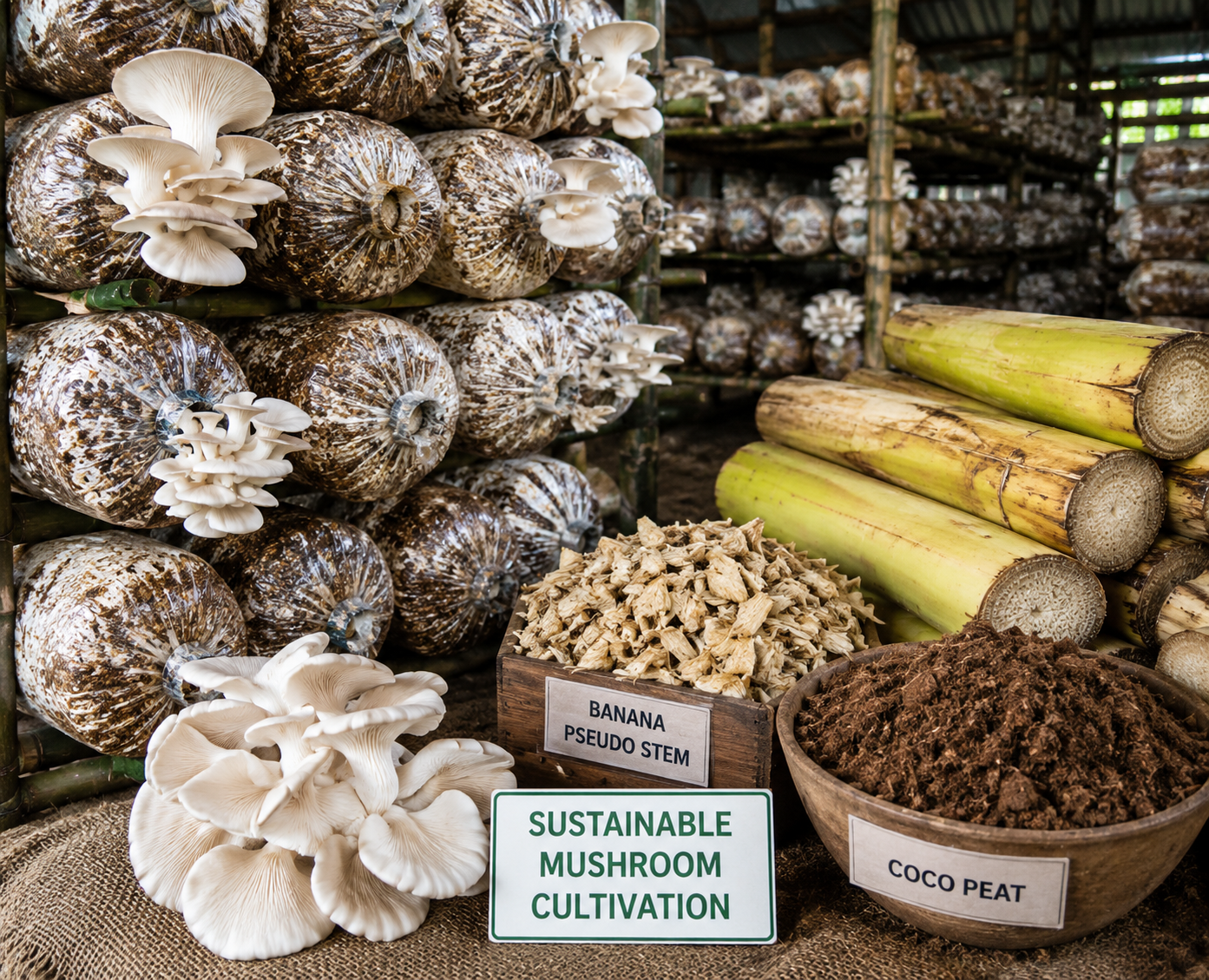
Mushroom Cultivation with Banana Pseudo stems and Coco Peat
Design and development of low-cost mushroom cultivation technology using banana pseudo stems and coco peat as sustainable growing substrates.
View Details
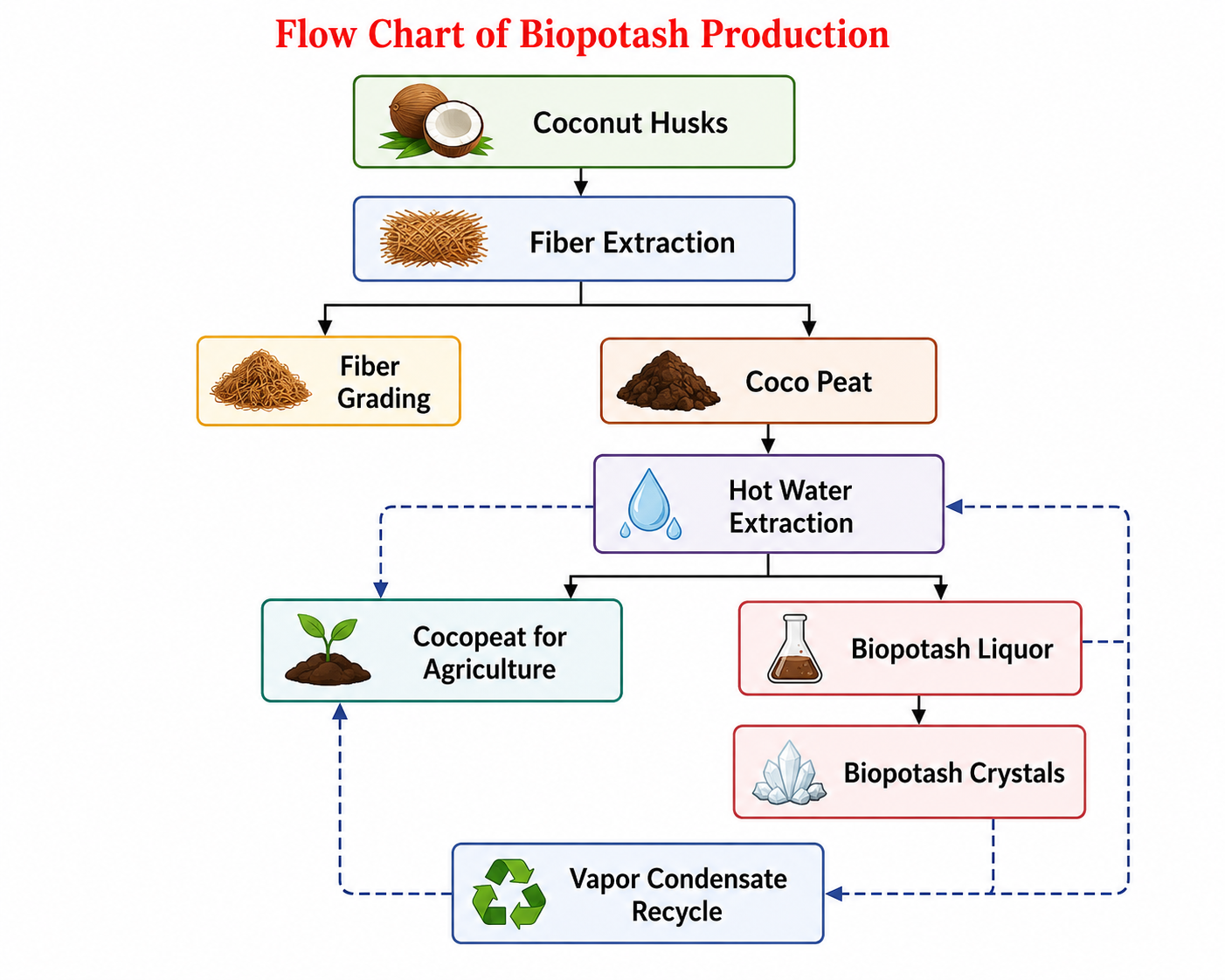
Byproducts by Processing of Coconut Waste
Development of value-added products from coconut waste, including activated charcoal, coir fiber, biodegradable pots, and other eco-friendly materials.
View Details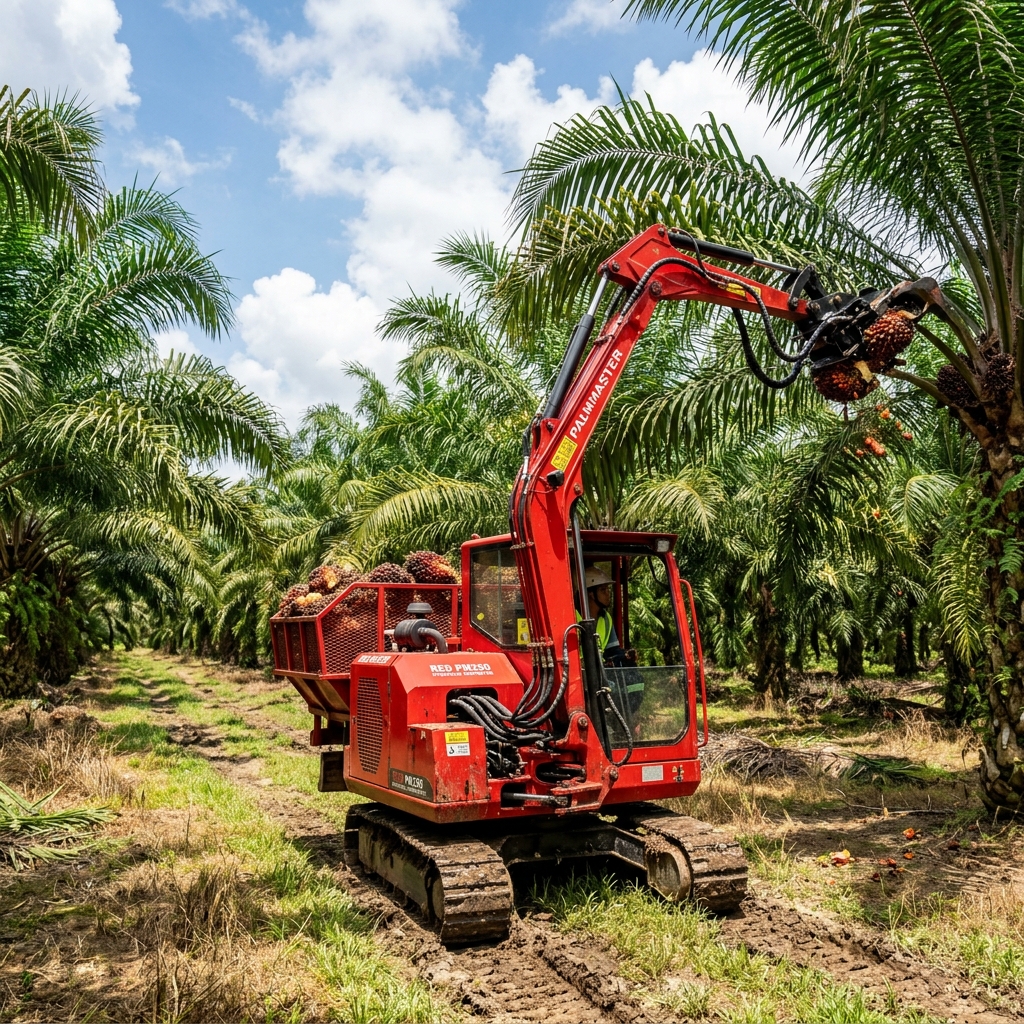
Design and Development of Adjustable Hydraulic Harvester for Oil Palm
Design and development of an adjustable hydraulic harvester with camera-assisted operation for safe, efficient, and ergonomic oil palm harvesting.
View DetailsDesign and Development of Community Level Mango Pulp Extractor
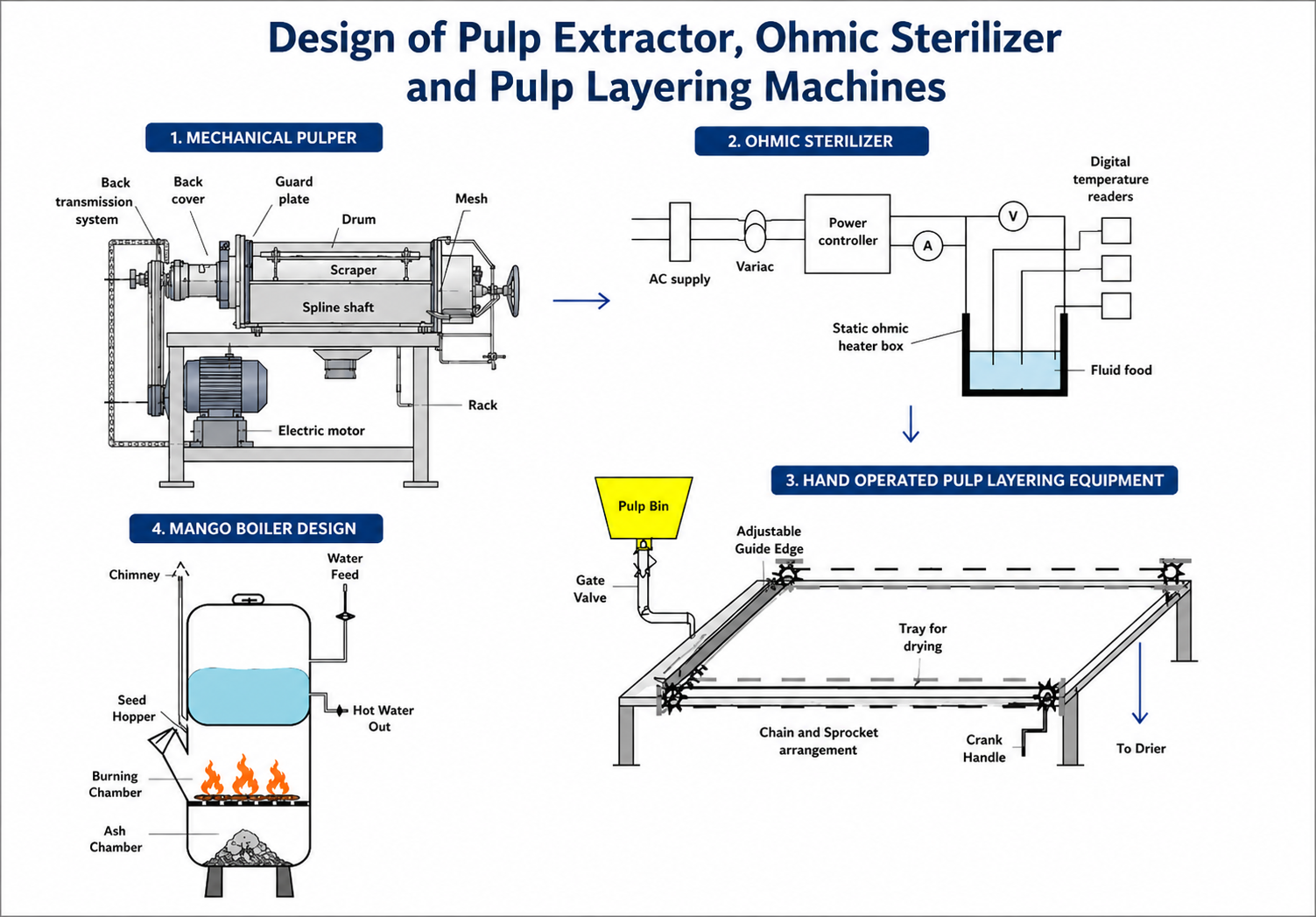
Currently, mango jelly preparation involves manual extraction of pulp by squeezing the ripen mangoes. This process is inefficient and laborious, often leads to contamination and severe physical stress on workers and mango jelly is sun dried and is often of low quality and has less shelf life due to flies and other insect infestations.
To improve the quality of jelly, and to increase the shelf life, a low-cost infrared assisted solar dryer will be designed and developed to use at community level. Technology can be extended to pulping of locally available fruits such as Cashew apple, palm fruit and other seasonal fruits.
Ripe fruits which are free from defects and spoilage are selected and washed. Pulp is extracted in the pulping machine. It is canned and pasteurised. Pulp is layered on trays dried in infra red light assisted Solar drier. Temperature and humidity are maintained to prevent maillard reactions and over heating.
The proposed intervention will strengthen the already existing cottage industry on mango pulp and will also open up new avenues for people working as agricultural labor to take this up as an alternate livelihood activity.
Traditional mango pulp processing relies heavily on manual extraction and open sun drying, resulting in high labor requirements, lower processing efficiency, hygiene concerns, inconsistent product quality, and reduced shelf life.
A low-cost community-level mango pulp extraction system integrated with an infrared-assisted solar dryer is proposed to enhance processing efficiency, maintain product quality, improve hygiene, and extend shelf life.
- Semi-automatic pulp extraction
- Infrared assisted solar drying
- Improved hygiene and quality control
- Enhanced product shelf life
- Suitable for mango, cashew apple, palm fruit, guava and other seasonal fruits
- Reduced labour and processing time
- Improved product quality and safety
- Extended shelf life of processed products
- Enhanced income generation for rural communities
- Increased entrepreneurship and self-employment opportunities
- Strengthening of cottage and small-scale food processing industries
Technology Concept
Mushroom Cultivation with Banana Pseudo stems and Coco Peat
Byproducts by Processing of Coconut Waste
Design and Development of Adjustable Hydraulic Harvester for Oil Palm
EXPECTED
IMPACT
Socio-Economic Benefits &
Community Livelihood Improvements
Improved socio-economic conditions
Creation of alternative livelihood
Increased household income
Enhanced skill development
Better access to technologies
Improved environmental sustainability
Greater community empowerment